
Warplanes of the Second World War preserved in Egypt
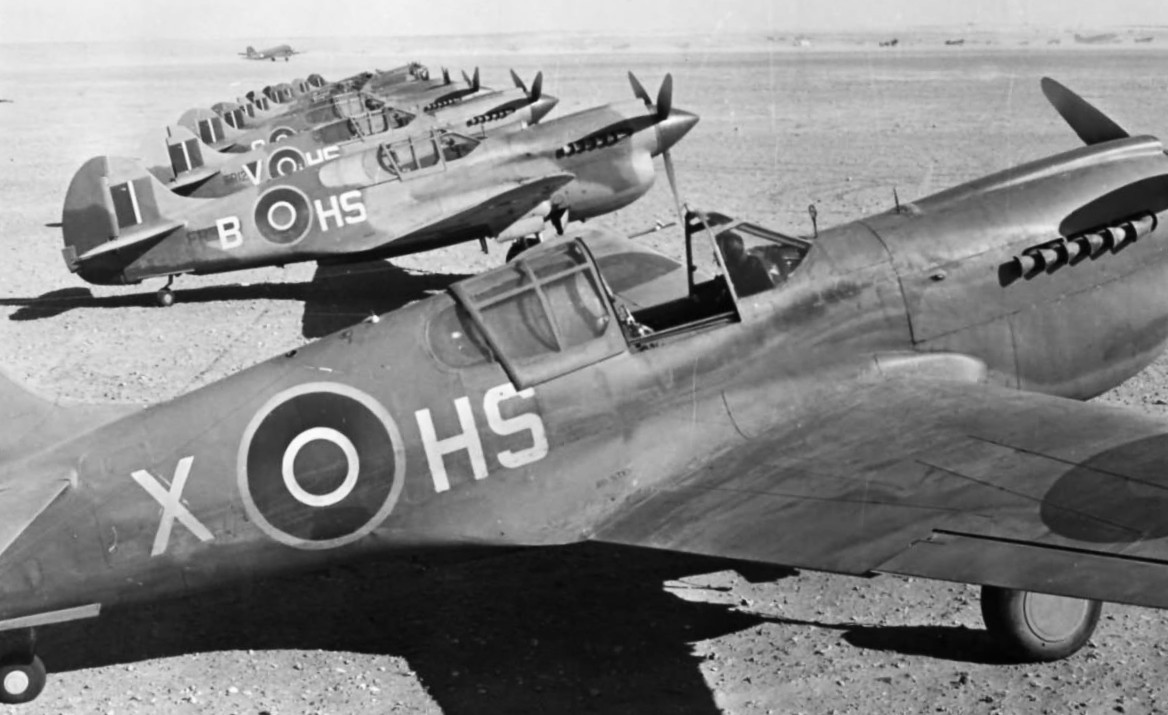
(RAF/World War Photo)
Curtiss Kittyhawk Mk. III fighters of No. 260 Squadron RAF December 1942.
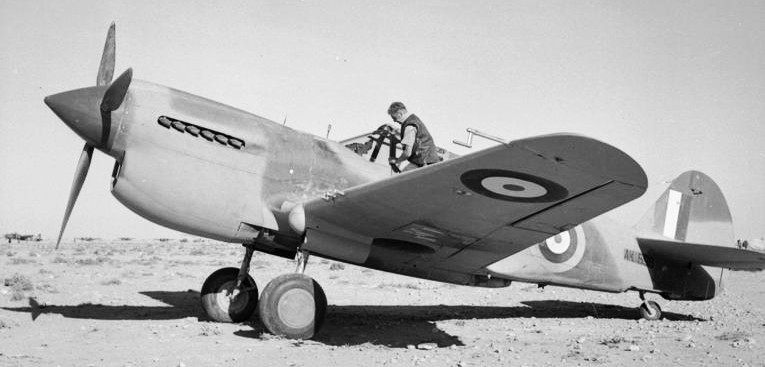
(IWM Photo, CM 2008)
Curtiss Kittyhawk Mk I, (Serial No. AK596), on a landing ground while being air-tested in the Western Desert. AK596 was one of nine Kittyhawks with which No. 94 Squadron RAF re-equipped on 1 February 1942. It later served with Nos. 250 and 260 Squadrons RAF, also in the North African theatre.
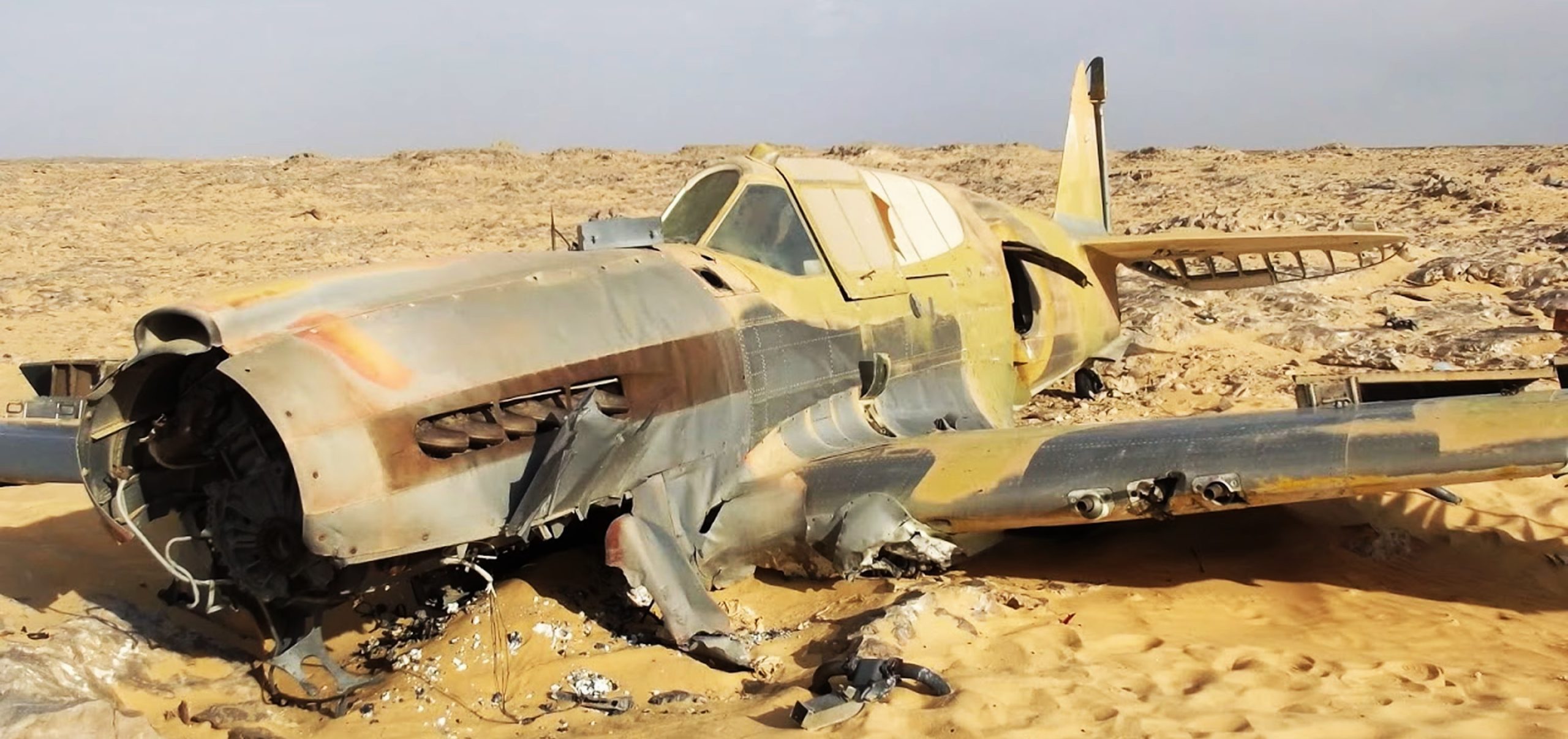
(Jakub Perka Photo)
Curtiss Kittyhawk Mk. IA (Serial No. ET574), was discovered early i 2012 when an oil survey team found the well-preserved wreck in Egypt’s Al-Wadi al-Jadid desert near the El Farafra Oasis. Jakub Perka, a Polish engineer on the survey team, documented the discovery with a series of photos.
This Kittyhawk was flown by Flight Sergeant Dennis Copping, with No. 260 Squadron RAF, when it disappeared during a ferry flight on 28 June 1942. Copping was part of a two-ship formation flying defective aircraft from the landing ground at Biur el Baheira to 53RSU, a Recovery & Service Unit at Wadi Natruna. At that time the rest of his squadron was making a hasty retreat from the advancing German Afrika Korps. Copping had to fly with the aircraft’s undercarriage fixed down. He had damaged the gear during a hard landing a day earlier; dazzled by the setting sun into misjudging his height above the runway. On the flight to the maintenance facility, his wingman noted light, but accurate flak. Unfortunately, Copping got well off course during the melee, but failed to respond by radio, or to be persuaded via hand signals to correct his heading according to the pilot flying beside him. Eventually the wingman gave up and made off for his intended destination alone. Sadly, Copping was never seen again.
There were some holes in the fuselage skin above the radio compartment. It is clear that something exploded upwards from below… perhaps as a result of the mild flak Copping encountered on his flight. If it damaged the communications gear, that could explain why his wingman couldn’t raise him on the radio. The damage could also explain why Copping didn’t acknowledge his fellow pilot’s hand signals. The Kittyhawk’s propeller was severely damaged, making it clear that the aircraft had forced-landed under power. The entire propeller unit had separated from the airframe, the engine’s reduction gear housing having shattered. The landing gear had sheared off as well, damaging the underside of the wings and horizontal stabilizers. Dennis Copping clearly survived the initial crash, because his body was not in the airframe nor had he ‘hit the silk’, as the remains of his parachute lay near the aircraft’s nose, perhaps erected as a sun-shelter by Copping himself after the accident. Since no remains were evident near the Kittyhawk, it seems likely that Copping wandered off into the desert in a desperate and ultimately futile attempt to reach salvation. He must have perished alone, and his remains have yet to be conclusively found.
The Royal Air Force Museum made an arrangement with the British firm Kennet Aviation (which specializes in restoring and operating vintage Second World War aircraft) to send a team of engineers into the desert to professionally dismantle and transport the Kittyhawk. In exchange,, the RAF Museum gave them a surplus aircraft from their collection, Supermarine Spitfire Mk. 22 (Serial No. PK664). Kennet Aviation’s team was successful in their mission, and placed the Kittyhawk in a storage container for safekeeping in El Alamein, near the ancient port city of Alexandria. They intended to conserve, rather than restore the Kittyhawk, and display her in a diorama resembling the scene she had endured over the previous seventy years in the desert. The Kittyhawk is now with the El Alamein Military Museum. (Wikipedia)
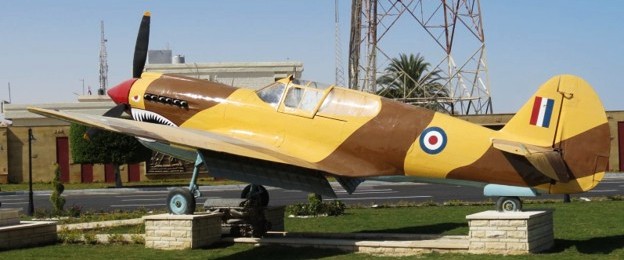
(Steven Phipps Photo)
Curtiss Kittyhawk Mk. IA (Serial No. ET574), with the El Alamein Military Museum.
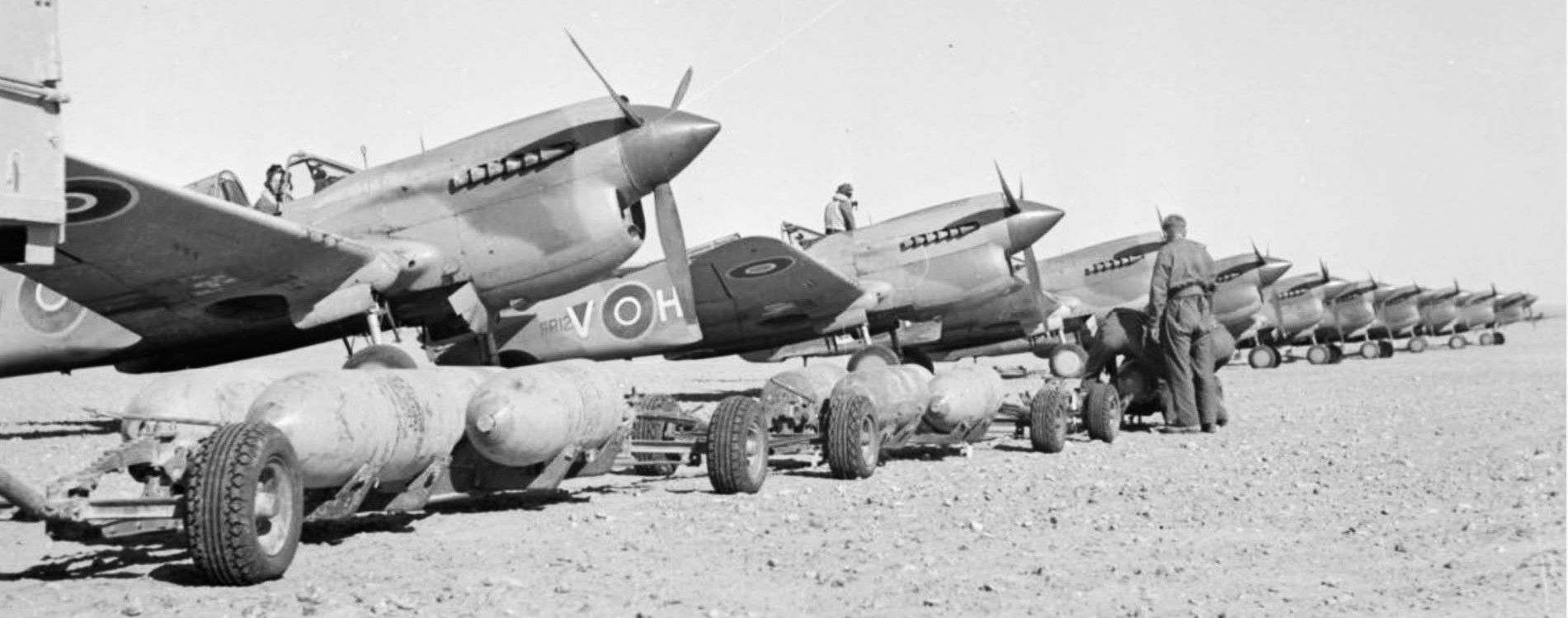
(IWM Photo, CM 4340)
Trolleys loaded with 250-lb GP bombs are drawn up in front of a line of Curtiss Kittyhawk Mk. IIIs, (Serial No. FR312), coded HS-V and (Serial No. FR350), coded HS-B, Lt JF Edwards, RCAF, at Marble Arch, landing ground, Libya, prior to a bombing sortie.
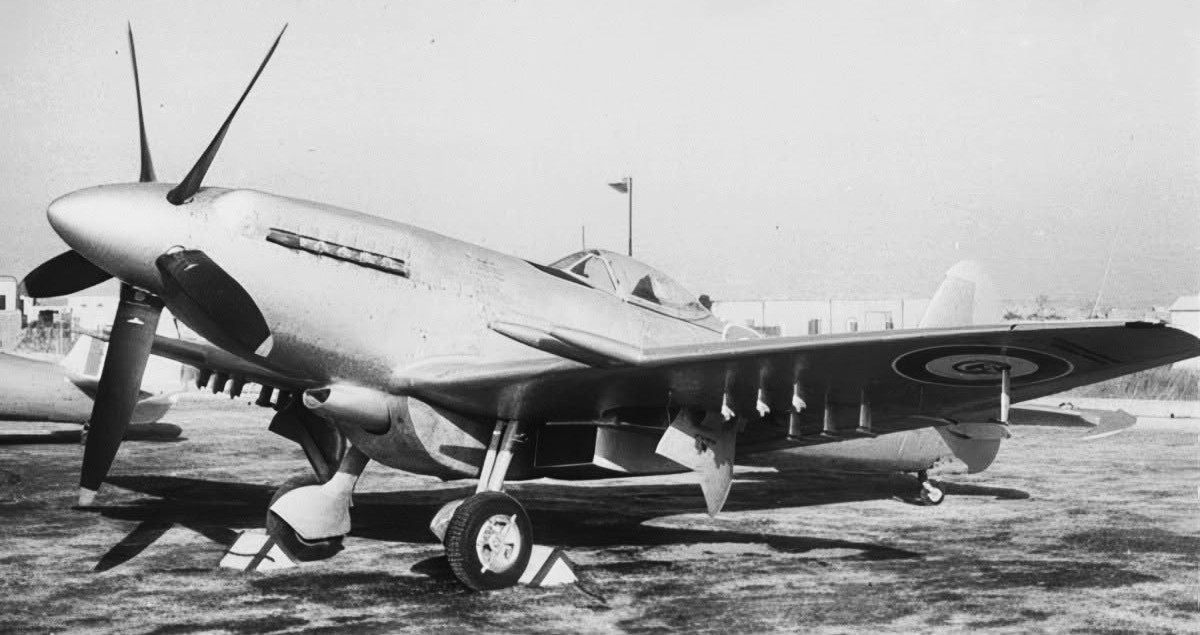
(RAF Photo)
Egyptian Supermarine Spitfire Mk. 22 at Luqa, Malta, during delivery from England. It is equipped with a Griffon engine, long range fuel tank and a bubble canopy.